Do you struggle to move past emotional pain?
Do past hurts still surface, no matter how much time has passed?
You’re not alone.
I know what it feels like to carry emotional wounds for years—trying to move forward while silently holding onto the past.
I experienced childhood abuse, neglect, and later, domestic violence. I also endured the heartbreak of losing my children.
Over time, I built walls around my heart.
At first, it felt like protection.
But eventually, those walls became a prison.
When the Past Comes Back
For years, I thought I had moved on.
But I hadn’t healed—I had only buried the pain.
And one day, it all came back.
The memories.
The emotions.
The unresolved hurt.
Trying to ignore it hadn’t worked.
Pushing it down hadn’t worked.
Instead, I became bitter, guarded, and closed off.
Especially in relationships.
I wanted connection—but I didn’t know how to let anyone in.
The Moment Everything Hit Me
At one point, someone I was dating sent me a song:
“Come From the Heart.”
I didn’t even make it through the whole video.
Halfway through, I broke down in tears.
Because deep down, I knew the truth:
My heart was closed.
And I didn’t know how to open it again.
I remember thinking:
How do you let go?
How do you love without fear?
How do you stop repeating the same patterns?
Step 1: Acknowledge the Pain
You can’t heal what you refuse to face.
The first step is acknowledging your past—honestly and without avoidance.
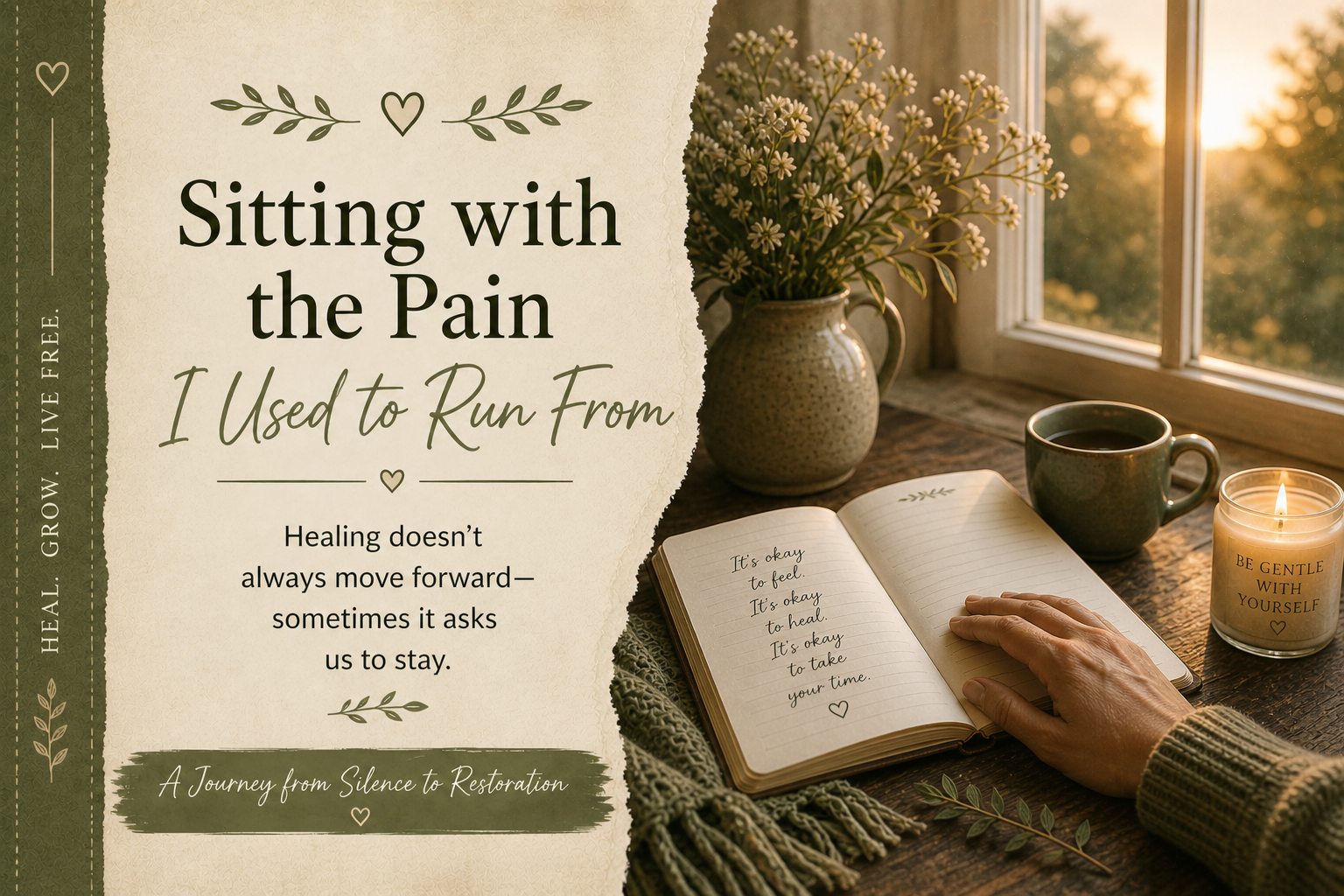
For me, writing became a powerful tool.
Journaling helped me:
- process buried emotions
- release painful memories
- understand what I had been carrying
When you put your feelings into words, something begins to shift.
You stop running—and start healing.
Step 2: Choose Forgiveness
Forgiveness is one of the hardest steps.
But it’s also one of the most freeing.
Holding onto anger may feel like protection, but it keeps you stuck.
I used anger as a defense mechanism for years. It helped me avoid deeper pain—but it also kept me from healing.
Forgiveness doesn’t mean what happened was okay.
It means you’re choosing not to let it control your life anymore.
That includes:
- forgiving others
- and forgiving yourself
When I finally did that, I felt a weight begin to lift.
Step 3: Open Your Heart Again
So how do you love again after pain?
You don’t force it.
You allow it—slowly.
Another song later reminded me of something simple but powerful:
Let your light shine.
Not someday.
Not when everything feels perfect.
Now.
Opening your heart again means choosing not to hide.
It means stepping out of isolation and allowing yourself to be seen—little by little.
Yes, there’s risk.
But there’s also growth.
Healing Doesn’t Mean You’ll Never Hurt Again
It means you’re no longer ruled by fear.
It means your heart is no longer closed off from life.
It means you can love—even knowing life isn’t perfect.
Because your strength doesn’t come from avoiding pain.
It comes from healing through it.
You Can Move Forward
If you’ve been hurt, it’s understandable to protect yourself.
But healing asks something more:
To acknowledge
To forgive
To open your heart again
Not all at once—but step by step.
And as you do, something changes.
Your heart softens.
Your perspective shifts.
And hope returns.
Reflection
What pain have you been holding onto?
What would it look like to begin letting it go—one step at a time?

Is a reflective life writer and author of the upcoming memoir The Secret Darkness: Overcoming Abuse and Finding Freedom. Her writing explores healing, faith, creativity, and the journey of restoring scattered remnants into something beautiful again.
Leave a Reply